Crest
Enterprise product design for an AI-powered supply chain platform, focusing on improving acquisition, activation, and operational efficiency across complex workflows.
Services
#
Experience design
#
Information design
Objective
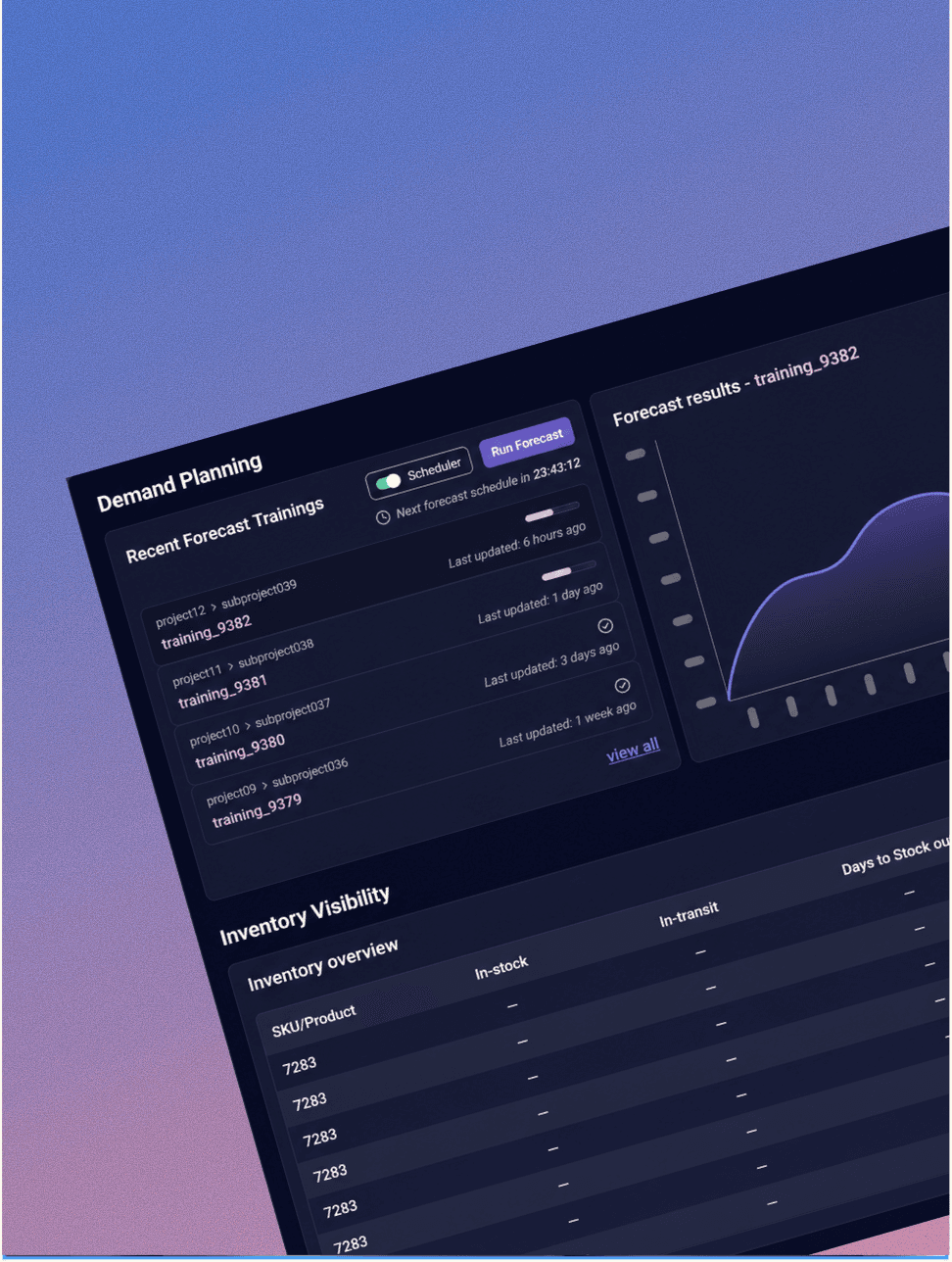
Design an intuitive, scalable enterprise experience for CREST, enabling efficient inventory and demand planning.
Create a unified demand planning dashboard that provides a clear, real-time view of inventory health at a glance
Design end-to-end flows across Planning, Forecasting, Inventory, and Reporting for seamless task execution
Simplify complex workflows to enable users to fully leverage the platform’s capabilities in inventory and demand planning
Establish consistency across the product experience, improving usability and reducing friction
Enhance overall experience through clarity, structure, and visual appeal, making enterprise workflows more intuitive and engaging

Solution
Reduced product complexity by introducing clear, system-driven workflows that accelerate action and scale with growth.
Reframed core user journeys to prioritise activation and high-frequency tasks, reducing friction across critical paths
Translated complex processes into guided, decision-driven interactions, improving clarity and speed of use
Introduced side navigation, breadcrumbs, and progress indicators to maintain context, orientation, and seamless exploration
Used purposeful visual distinction, micro-interactions, and subtle motion to enhance usability while avoiding cognitive overload
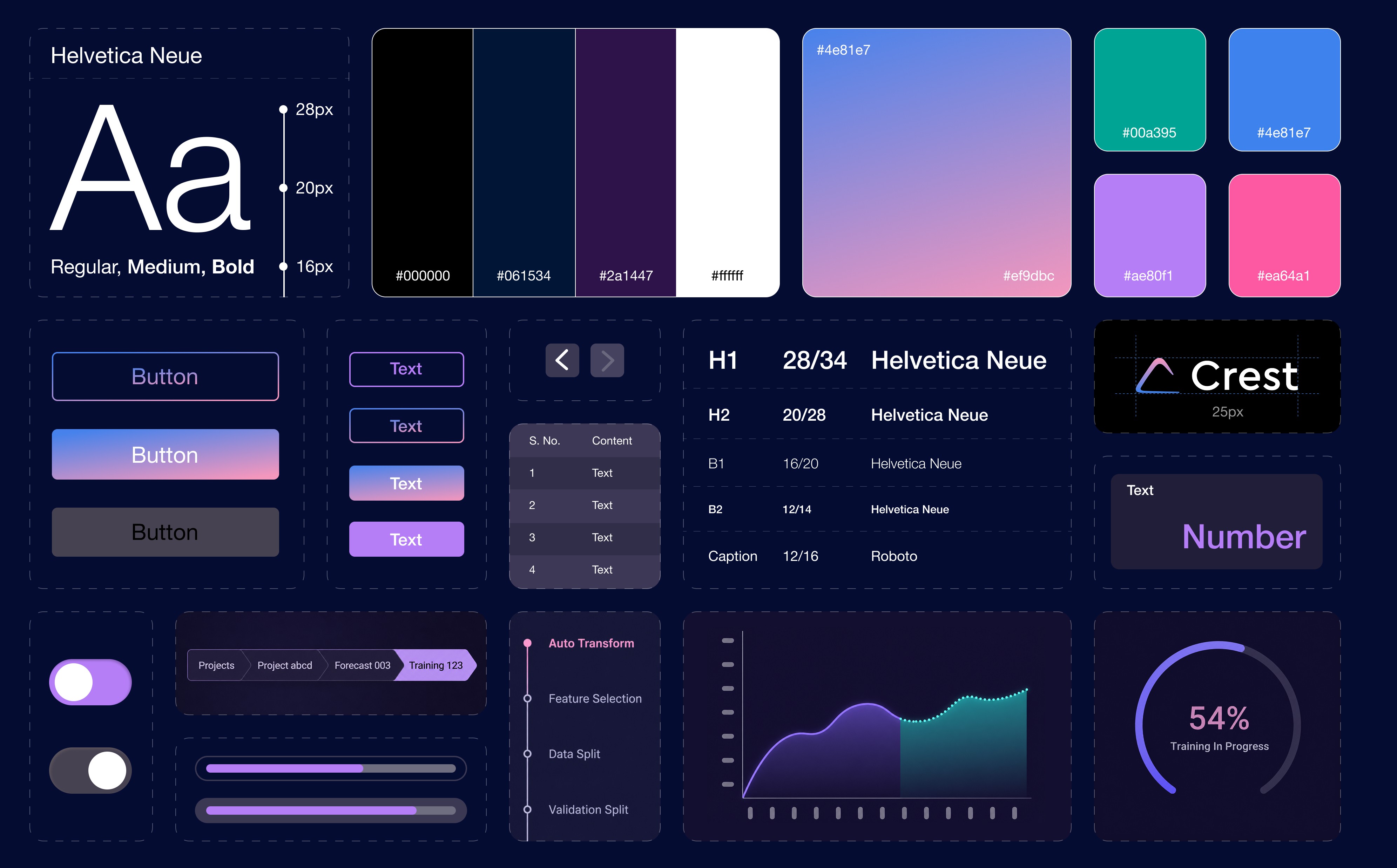
Built a scalable design system and pattern library (tables, filters, dashboards, workflows) to ensure consistency across the product
Established UX guardrails and interaction standards, aligning product, engineering, and business for faster execution
Reduced cognitive load, enabling users to make faster, more confident decisions in complex enterprise workflows


Impact
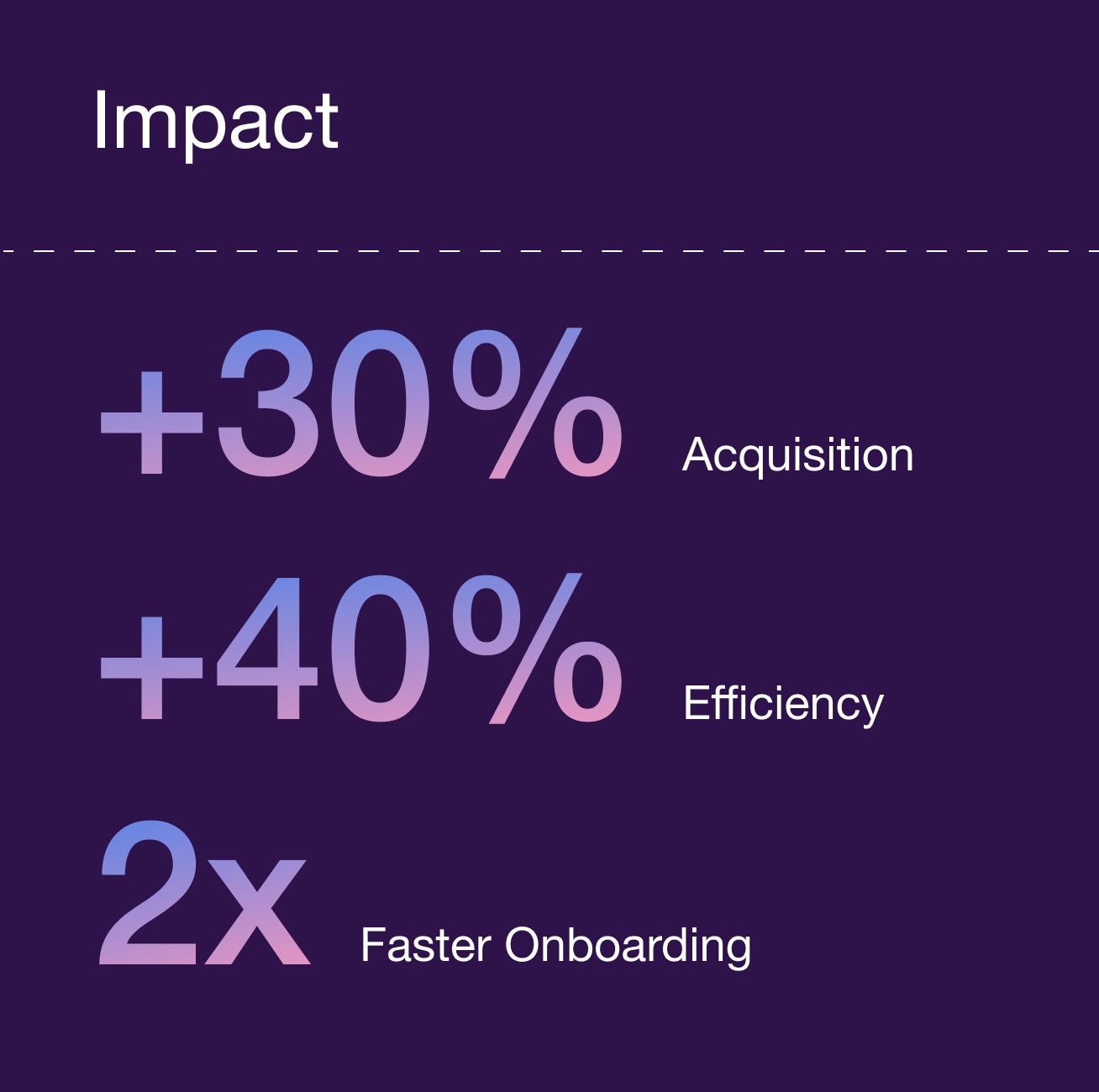
Simplified workflows and scalable systems accelerated adoption, efficiency, and product growth.
Drove a 30% increase in user adoption and 40% improvement in operational efficiency.
Reduced time-to-action across key workflows, improving adoption and retention.
Accelerated product development through reusable systems, enabling faster feature rollout and iteration.